The Belleau Wood Stand: How Marines Refused to Retreat
Few battles hold a more important place in Marine Corps history than Belleau Wood.
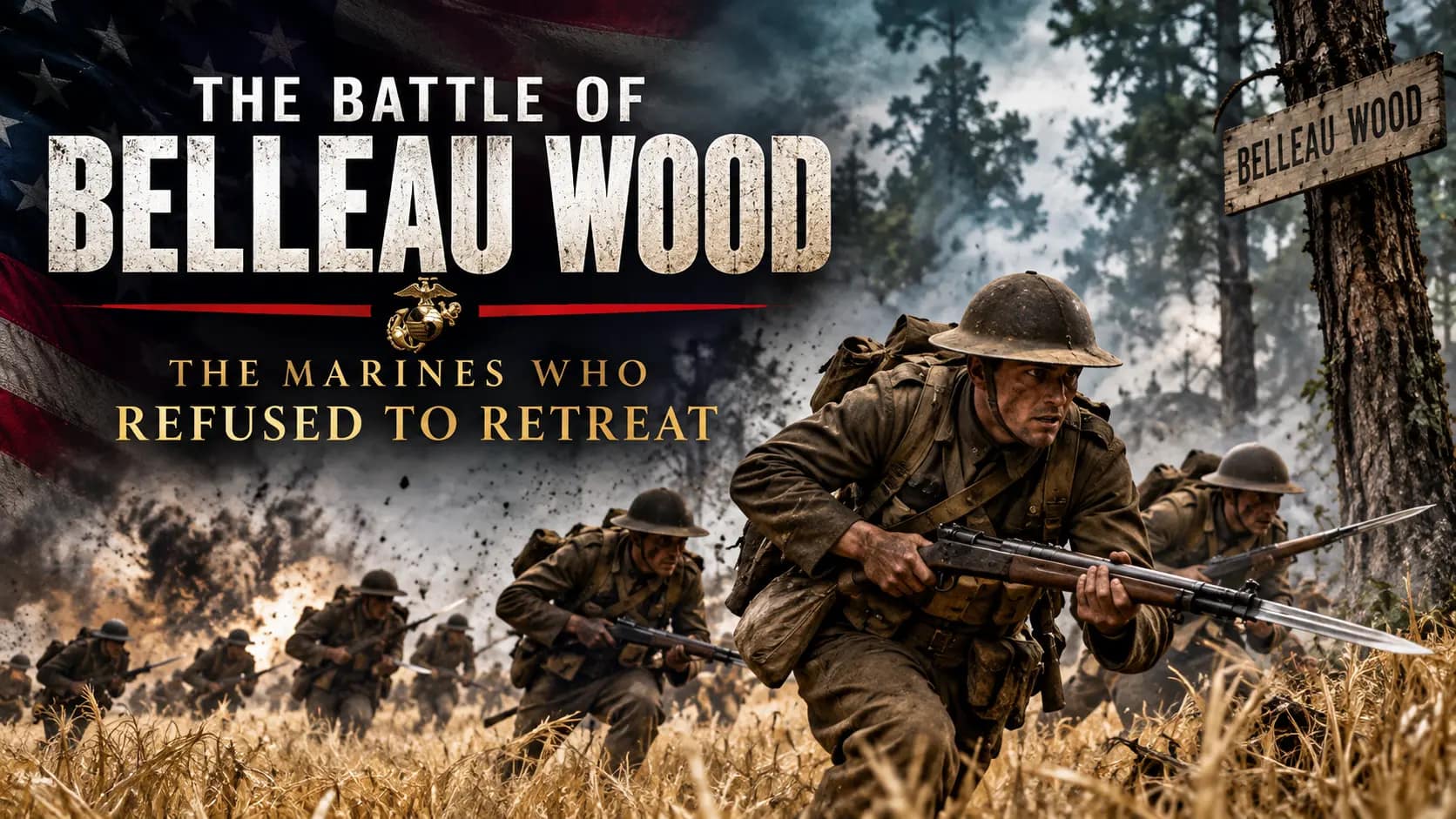
Fought in June 1918 during World War I, The Battle of Belleau Wood was among the first large-scale Marine engagements.
Additionally, they faced experienced German forces, endured heavy machine-gun and artillery fire, and earned a reputation for discipline and grit.
The story began before the main assault.
On June 1, German forces pushed into French positions near the Marines. The following day, the 51st Company, 2nd Battalion, 5th Marines, under Capt. Lloyd Williams, moved forward to support the French army.
As the Marines arrived, French troops were pulling back.
The French urged the Marines to retreat with them.
Williams answered with words that became part of Marine Corps history:
“Retreat? Hell, we just got here.”
That response captured the attitude the Marines would carry into the battle.
The Attack Begins
At 3:45 a.m. on June 6, Allied forces launched an attack against German troops preparing an offensive of their own.
French forces attacked on the left while Marines moved against Hill 142 to protect the French from flanking fire.
The Marines soon encountered a serious problem.
German infantry had established machine gun positions and artillery inside the woods. The Marines advancing toward them were outnumbered and facing prepared defensive positions.
1st Battalion, 5th Marines, under Maj. Julius Turrill, moved forward anyway.
They crossed an open wheat field in waves with fixed bayonets while German machine guns and artillery fired into their formation.
The cost was severe.
Many Marines were killed or wounded during the assault.
Yet the advance continued.

Capt. George Wallace Hamilton
Individual acts of courage quickly became part of the battle.
Capt. George Wallace Hamilton of the 49th Company encountered German troops preparing machine gun positions.
Hamilton reached them before the weapons were fully set.
He attacked with his bayonet and captured the machine guns.
According to the video, Hamilton later received two Distinguished Service Crosses and a Navy Cross for his gallantry.
His actions reflected the close-range fighting and individual initiative that defined much of Belleau Wood.
Gunnery Sgt. Ernest Janson
During a German counterattack on Hill 142, Gunnery Sgt. Ernest Janson confronted another dangerous situation.
Twelve German soldiers advanced toward the Marine position.
Janson stopped the advance, killing two soldiers with his bayonet before the remaining troops fled.
His actions resulted in his becoming the first Marine to receive the Medal of Honor during World War I.
The fighting at Belleau Wood demanded more than marksmanship and battlefield tactics.
It demanded Marines willing to hold their ground at close range.
“Do You Want to Live Forever?”
At approximately 5 p.m. on June 6, another Marine assault began.
Marines advanced through waist-high wheat toward German machine gun positions.
It was during this advance that Gunnery Sgt. Dan Daly delivered one of the most famous lines associated with Marine Corps history.
As his Marines prepared to move forward, Daly urged them on:
“For Christ’s sake, men. Come on. Do you want to live forever?”
The words have remained associated with Belleau Wood for generations.
They represent the determination required from Marines ordered to advance across exposed ground against entrenched enemy positions.
A Defining Day in Marine Corps History
June 6, 1918 became one of the defining dates in the history of the Marine Corps.
The Marines at Belleau Wood faced machine guns, artillery, open terrain, and a determined enemy.
They suffered casualties.
They kept moving.
They fought at close range.
They refused to withdraw simply because the conditions favored the enemy.
Belleau Wood became part of Marine Corps identity because of what those Marines demonstrated under extreme pressure.
Leadership.
Discipline.
Aggression.
Courage.
Commitment to the Marines beside them.
The battle helped establish a reputation Marines would carry through future generations and future conflicts.
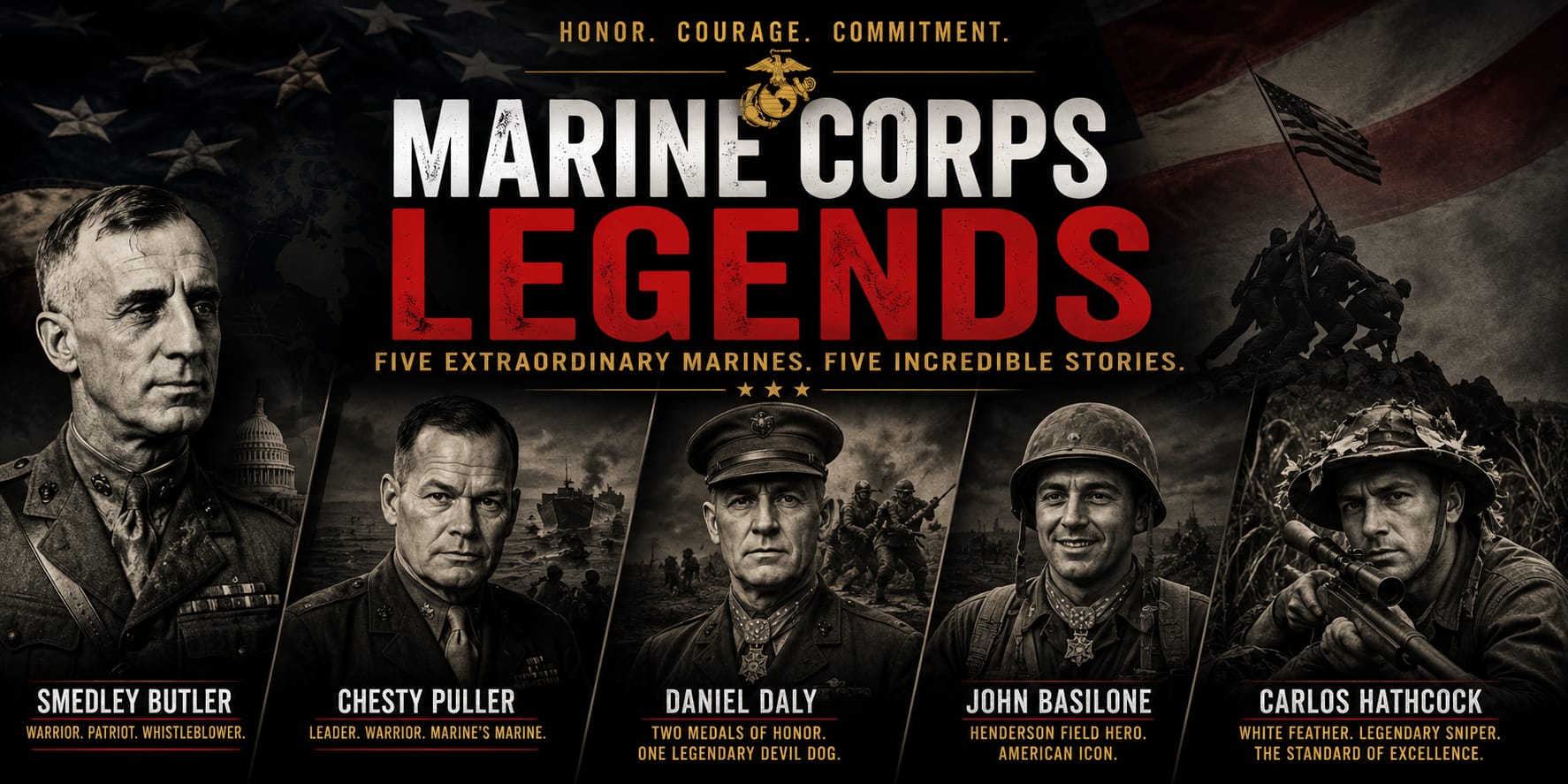
More than a century later, names such as Lloyd Williams, George Wallace Hamilton, Ernest Janson, and Dan Daly remain connected to the fight.
Their actions remind Marines today of the standards established by those who served before them.
The story of Belleau Wood is not only the story of a battlefield in France.
It is part of the story of the United States Marine Corps.
Semper Fidelis.