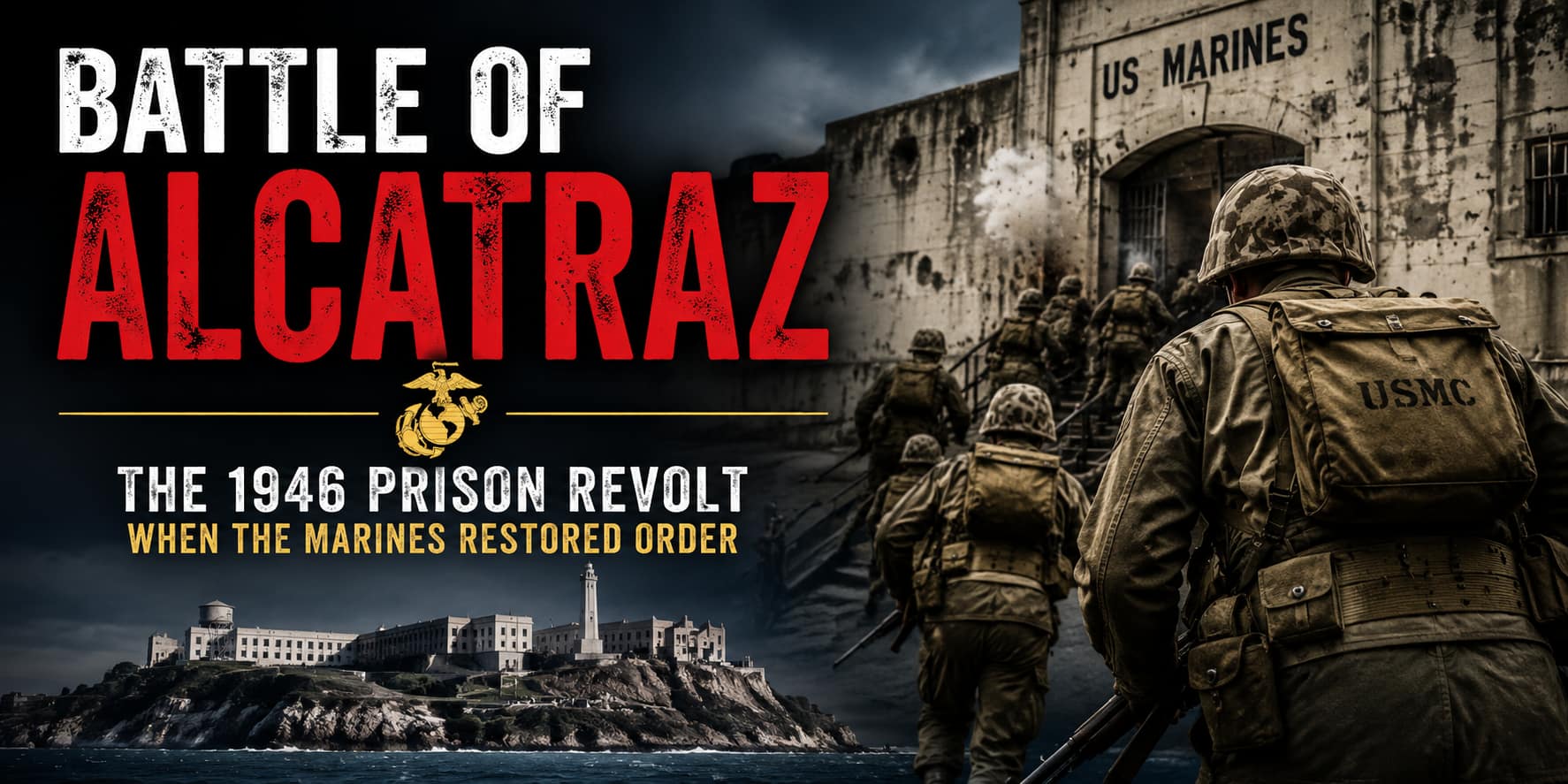
Battle of Alcatraz. When the Marines Ended the 1946 Prison Revolt
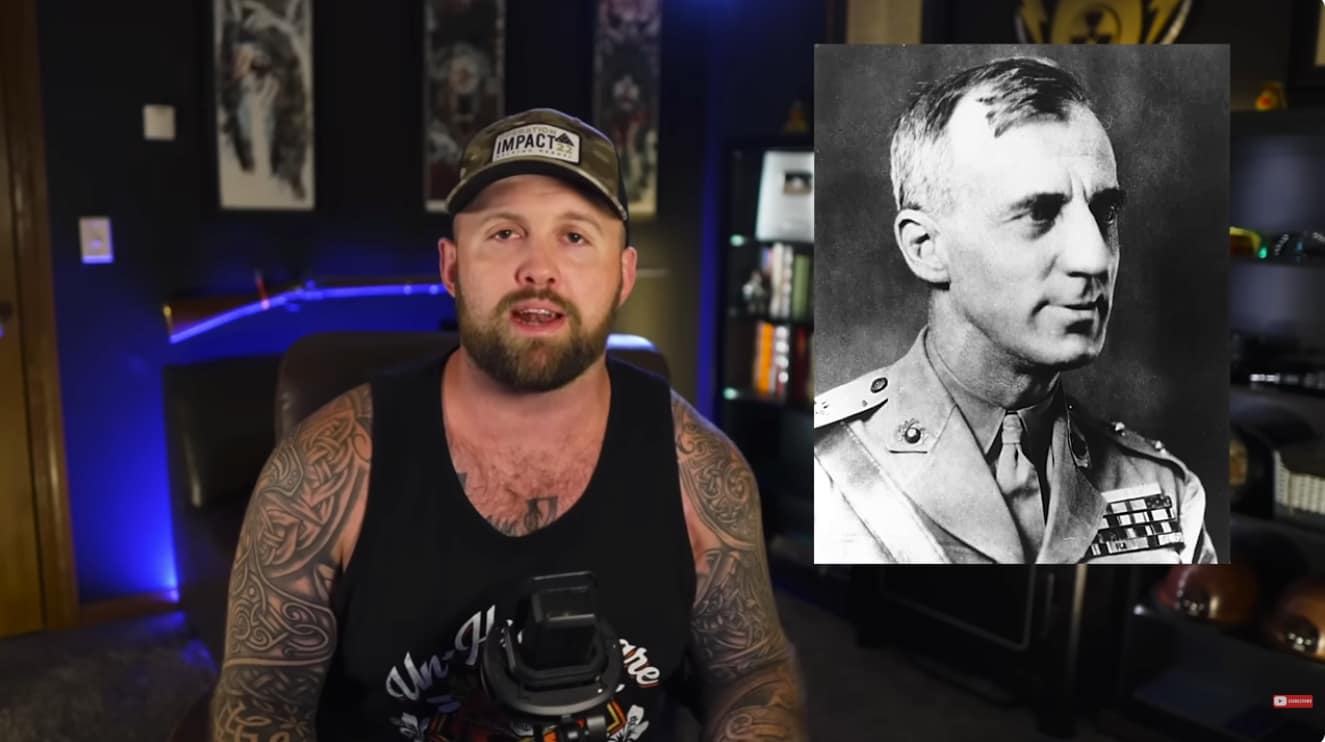
Source: Please visit and support: https://thefatelectrician.com/ & https://www.youtube.com/@the_fat_electrician
The Battle of Alcatraz. When the Marines Were Called to End a Prison Revolt
Most people know Alcatraz for its infamous inmates and daring escape attempts. Few know about the violent prison uprising in 1946 that forced federal officials to make an extraordinary decision. They called on the United States Marine Corps.
The Battle of Alcatraz remains one of the most unusual chapters in Marine Corps history. Armed inmates seized control inside America’s most secure prison, guards were killed and wounded, and local authorities found themselves facing a situation they could no longer contain. The Marines responded with the same discipline and determination they had demonstrated throughout World War II.
A Nation in Transition
The events unfolded during a period of major change for the United States military.
World War II had ended only months earlier. Military leaders and members of Congress debated the future structure of the armed forces. With the growing importance of air power, some questioned whether the Marine Corps still served a unique purpose. Budget cuts and even proposals to eliminate the Corps were under discussion in Washington.
Before those debates could be settled, history provided an unexpected demonstration of why Marines remained essential.
The Escape Plan
On May 2, 1946, several inmates at Alcatraz launched a carefully planned escape attempt.
The prisoners overpowered guards, seized weapons from the prison’s gun gallery, and took control of portions of the cell block. Their plan depended on unlocking secure doors, reaching the prison yard, capturing a supply boat, and escaping to San Francisco.
Everything unraveled when one critical key was missing.
Unable to open the final security door, the inmates found themselves trapped inside the prison with no way out.
From Escape Attempt to Deadly Battle
What began as an escape quickly became a desperate firefight.
The inmates opened fire on correctional officers, killing guards and wounding several others. With hostages inside the prison and armed prisoners occupying fortified positions, prison officials realized they faced far more than a routine disturbance.
Federal authorities requested military assistance.
Why the Marines?
The Marines selected for the mission were not ordinary troops.
Many had only recently returned from fierce fighting across the Pacific, including operations on Guam where they cleared fortified Japanese positions and underground bunkers.
Their recent combat experience made them uniquely qualified for the dangerous mission awaiting them on Alcatraz Island.
Approximately 80 Marines landed on the island carrying rifles, machine guns, grenades, and other specialized equipment. Their objective was clear.
Rescue any surviving guards.
Eliminate the threat.
Restore control of the prison.
A Calculated Assault
Marine commanders first worked to evacuate wounded guards and establish control over key areas of the prison.
Once they confirmed the remaining inmates had retreated into reinforced utility corridors beneath the prison, the Marines shifted tactics.
Using tear gas, controlled explosives, rifle grenades, and carefully planned demolition techniques, they forced the prisoners into increasingly confined positions before launching the final assault.
The fighting lasted three days.
When the battle ended, the prison was back under federal control.
The Cost
The Battle of Alcatraz came at a heavy price.
Correctional officers lost their lives protecting the prison.
Several guards suffered serious injuries.
Three of the principal inmate leaders were killed during the Marine assault.
Others involved in the uprising later stood trial and received lengthy prison sentences or the death penalty for their roles in the violence.
The prison itself suffered extensive structural damage from gunfire, grenades, and demolition charges.
A Defining Moment for the Marine Corps
The timing proved significant.
Only days after the battle ended, Commandant General Alexander A. Vandegrift appeared before Congress to defend the future of the Marine Corps.
News coverage across the country featured headlines about Marines restoring order at Alcatraz.
The operation highlighted the Corps’ unique ability to solve difficult missions requiring speed, discipline, and specialized combat experience.
While many factors ultimately shaped the future of the Marine Corps, the successful response at Alcatraz reinforced the value of maintaining a highly trained expeditionary fighting force ready to respond whenever the nation called.

Why This Story Matters
The Battle of Alcatraz is often overshadowed by the famous 1962 escape attempt made popular through books and film.
Yet the events of May 1946 tell a different story.
They reveal the professionalism of correctional officers who continued fighting under impossible circumstances.
They demonstrate how recently returned combat Marines applied battlefield experience to protect lives on American soil.
They also remind us that history often turns on moments few people remember.
For Marines, veterans, and anyone interested in military history, the Battle of Alcatraz stands as a remarkable example of courage, adaptability, and decisive leadership during one of the most unusual missions in Corps history.
Semper Fidelis.