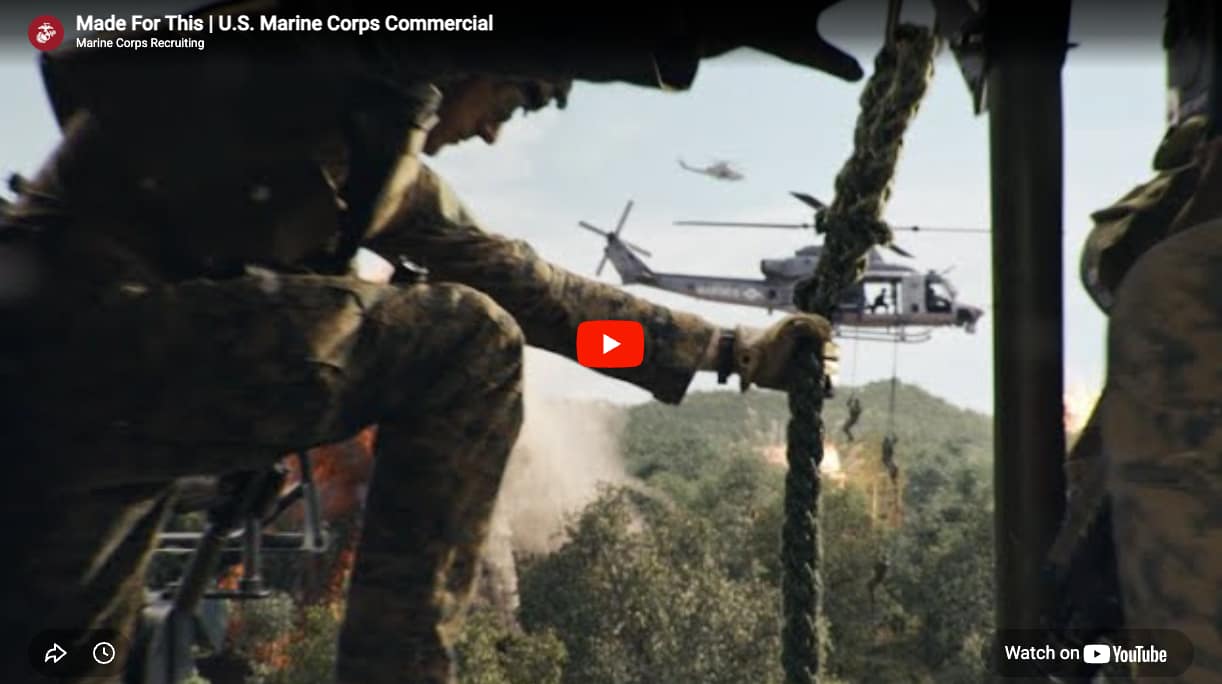
Iwo Jima: The Ultimate Story of Marines’ Endurance
Source: Marines – https://www.youtube.com/@marines
Indeed, few names in Marine Corps history carry the weight of Iwo Jima.
The island was small, remote, and unfamiliar to most Americans. According to the video, Iwo Jima measured roughly 4 2/3 miles by 2 1/2 miles, with ash-covered beaches and the extinct volcano Mount Suribachi dominating the terrain.
Yet what happened there placed Iwo Jima permanently inside American history.
Approximately 450 United States Navy ships stood offshore as the landing force prepared to move toward the island.
Then the order came:
Land the landing force.

The Landing Begins
At two minutes after 9, Marines and Navy corpsmen stepped ashore.
At that moment, they did not know how deeply the battle would define the island, the Marine Corps, or the country.
They moved from the amphibious landing craft onto ash-covered beaches and into a fight remembered for extreme hardship.
The video frames Iwo Jima alongside names such as Saratoga, the Alamo, and Gettysburg.
The comparison reflects more than military importance.
Iwo Jima became remembered because of what American service members were asked to endure.
An Island Few Americans Knew
Before the battle, few Americans had heard of Iwo Jima.
Its size did not suggest its future importance.
The island measured only a few miles across. Its black volcanic terrain and ash-covered beaches created a severe environment even before combat began.
Yet thousands of Marines would soon become connected to the island forever.
Their actions transformed Iwo Jima from an obscure Pacific island into one of the most recognized names in American military history.
Enduring the Unthinkable
The video emphasizes the hardship faced by the Americans who landed there.
Their sacrifice is remembered not simply because they fought courageously.
They endured severe conditions in the name of freedom.
The Marines and Navy corpsmen who came ashore were called upon to keep moving despite conditions few people would ever experience.
Their endurance became part of the meaning of Iwo Jima.
Mount Suribachi
One image would come to represent the battle more than any other.
On Iwo Jima, the flag raising on Mount Suribachi became one of the defining images of World War II.
Moreover, it symbolized courage and unity for Allied forces.
The video describes the flag raising as a beacon and a birthright for future generations of Americans.
The moment represented more than possession of a piece of ground.
It became a symbol of sacrifice, courage, and national resolve.
For Marines, Mount Suribachi remains permanently connected to the Corps.
More Than a Battle
Iwo Jima is remembered because of the men who fought there.
The island became important because Marines and Navy corpsmen stepped ashore, endured severe hardship, and continued forward.
Their actions created a legacy far larger than the island itself.
The video places Iwo Jima among the defining locations of American history because of what happened there and because of what American service members were willing to endure.
The battle became part of the national memory.
For the Marine Corps, it became part of its identity.
A Legacy for Future Generations
The image of the flag over Mount Suribachi continues to carry meaning decades later.
It serves as a reminder of the men who landed on Iwo Jima and the price they paid.
The video closes with a simple message of remembrance and gratitude.
On behalf of all Americans, we salute the men of Iwo Jima.
Their courage remains part of the history of the United States Marine Corps.
Their sacrifice remains part of the history of the nation.
And the flag raised above Mount Suribachi remains one of the most enduring symbols of American service.
Semper Fidelis.