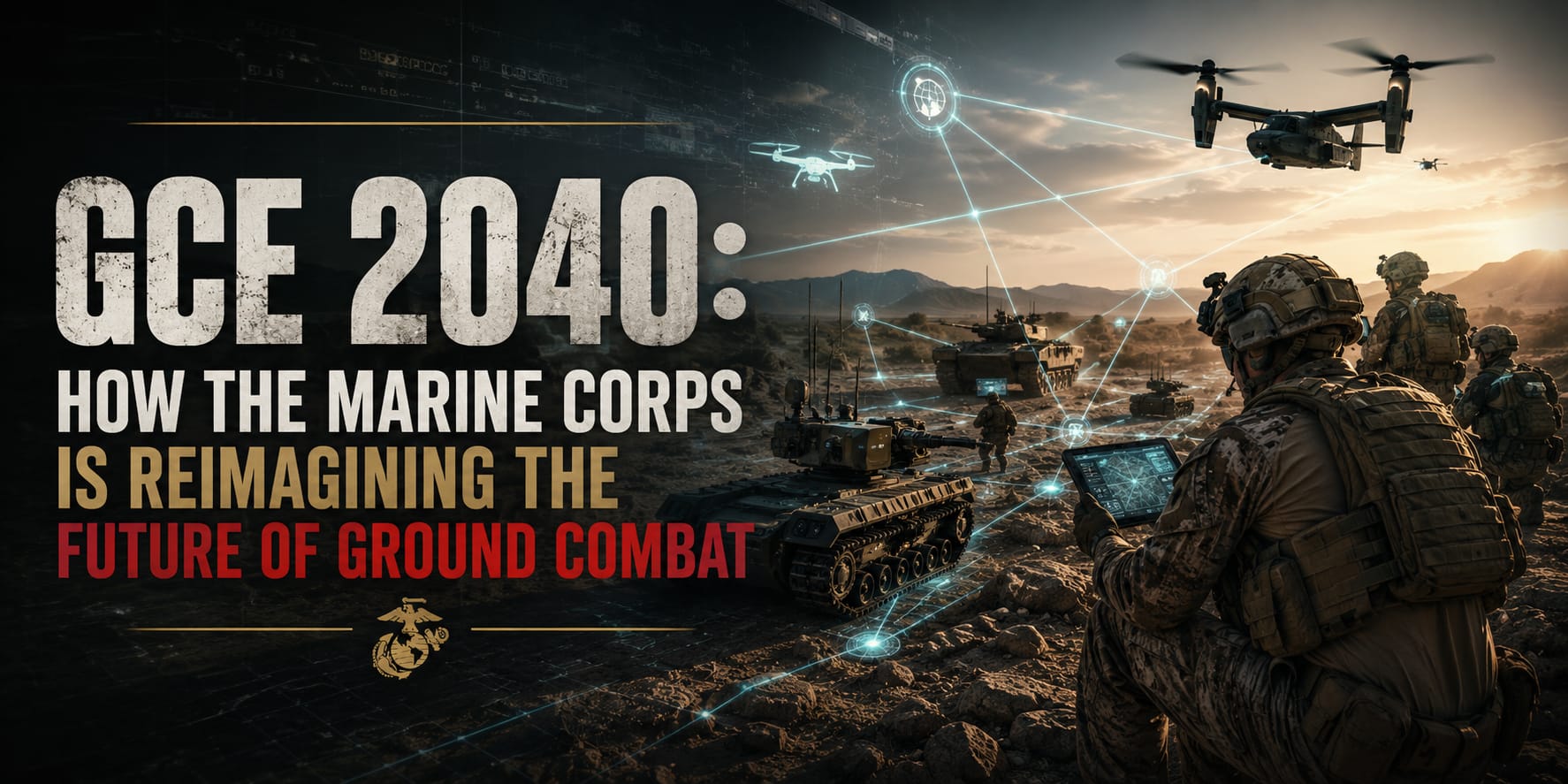
GCE 2040: How the Marine Corps is Reimagining the Future of Ground Combat
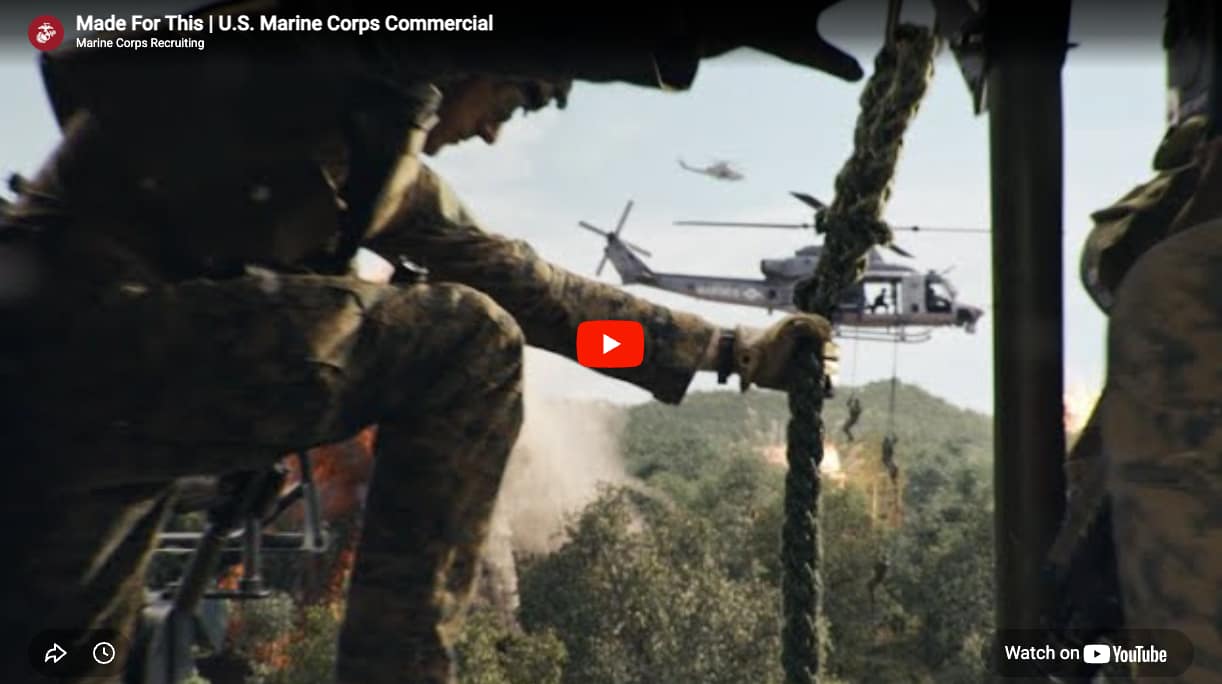
SOURCE: (U.S. Marine Corps video by CTR Moises Rodriguez, CTR Madison Santamaria)
GCE 2040: The Marine Corps’ Vision for the Future of Ground Combat
The Marine Corps isn’t waiting for the future of warfare to arrive—they’re building it now.
Ground Combat Element 2040 (GCE 2040) represents the Marine Corps’ strategic roadmap for transforming how expeditionary ground forces will fight, adapt, and win in the contested environments of the next 15 years. It’s not just about new weapons or equipment. It’s a fundamental reimagining of how Marines will leverage technology, artificial intelligence, autonomous systems, and human-centered innovation to maintain decisive superiority over adversaries.
The Challenge: Bridging Land and Sea
The Marine Corps has a unique mission: they are tasked with bridging the gap between land and sea. They project power from naval forces into contested battlefields. They operate in environments where traditional military doctrine may not apply. They must be ready to fight anywhere, anytime, against adversaries who are constantly evolving their tactics and technology.
The vulnerability is real. But the Marine Corps philosophy is clear: “Despite the vulnerability of the laterals, we bring the fight to our adversaries by delivering lethality to the enemy on their own turf.”
This requires rethinking ground combat from the ground up—literally.
The Vision: Agile, Enabled, Human-Centered
GCE 2040 is built on a single theory of success: “We will fight as an agile, technologically enabled, and human-centered force.”
Three words capture the essence:
- Agile – Rapid decision-making and adaptive tactics
- Technologically Enabled – Integration of cutting-edge systems and AI
- Human-Centered – Marines remain at the core, empowered by technology rather than replaced by it
This is critical: GCE 2040 is about equipping the Marine, not the machine. Technology is a tool to make Marines more effective, more lethal, and more adaptable—not to remove humans from the decision-making process.
Five Critical Functions: The Core of GCE 2040
The Marine Corps has identified five critical functions that will define ground combat in 2040:
1. Locate: Finding the Enemy Across All Domains
The first step in any military operation is knowing where the enemy is. GCE 2040 emphasizes integrating advanced sensors and intelligence networks to locate and fix the enemy across land, sea, and air domains.
This means:
- Networked sensor systems that share real-time intelligence
- Advanced radar capabilities that detect threats in all environments
- Intelligence fusion systems that turn raw data into actionable insights
- Autonomous reconnaissance platforms that scout without risking Marine lives
The goal is to achieve information dominance—know where the enemy is before they know you’re coming.
2. Close: Expeditionary Maneuver in Contested Spaces
Once the enemy is located, Marines must close the distance and engage. GCE 2040 focuses on expeditionary maneuver in contested spaces—the ability to move rapidly through hostile territory while sustaining operations.
This requires:
- Enhanced mobility and speed
- Resilient supply lines that can withstand disruption
- Distributed operations that don’t depend on centralized logistics
- The ability to operate independently across multiple locations simultaneously
Marines will move faster, strike harder, and maintain operations even when traditional support systems are compromised.
3. Destroy: Multi-Domain Precision Fires
Once Marines close with the enemy, they must be able to destroy them decisively. GCE 2040 emphasizes multi-domain joint force precision fires—the ability to strike targets with accuracy from land, air, and sea simultaneously.
This means:
- Long-range fires that engage targets far beyond traditional ranges
- Coordination between ground units, air support, and naval forces
- Precision accuracy that minimizes collateral damage
- The ability to achieve mass effect through coordinated strikes rather than overwhelming numbers
Marines will have more firepower, deployed more precisely, from more directions than ever before.
4. Defend: Active and Passive Protection
While offense is critical, Marines must also be able to defend against the full spectrum of threats. GCE 2040 includes both active defense (taking out threats) and passive defense (hardening forces against attack).
This includes protection against:
- Enemy fires and missiles
- Cyber attacks and information warfare
- Drone and autonomous systems
- Electromagnetic pulse and advanced weapons
- Adversary intelligence and reconnaissance
The goal is to create formations that can absorb punishment, adapt to threats, and continue fighting.
5. Command and Control: Decision-Making at Machine Speed
All of these capabilities mean nothing without the ability to command and control forces effectively. GCE 2040 emphasizes persistent, survivable command and control networks that enable decision-making at machine speed.
This represents a revolution in military command:
- AI-assisted decision support that processes vast amounts of data and presents options to commanders
- Project Dynamous – a concept that enables combat formations to sense, make sense, and act with greater speed and precision than any adversary
- Decentralized command authority where decisions can be made at the squad level without waiting for orders from higher-ups
- Network resilience so that loss of one communication node doesn’t collapse the entire command structure
Marines will make decisions faster than their enemies can react—a speed of decision that generates decisive advantage in combat.
Key Technologies: Building the Future Force
GCE 2040 integrates several cutting-edge technologies:
Advanced Radar and Sensors
Enhanced radar capabilities will allow Marines to detect threats in contested environments—places where GPS may be jammed and traditional navigation systems may not work.
Long-Range Precision Fires

Marines will have access to weapons systems that can strike targets at extended ranges with unprecedented accuracy, allowing them to engage threats before those threats can engage them.
Autonomous and Robotic Systems
Unmanned platforms—ground robots, aerial drones, autonomous vehicles—will perform reconnaissance, logistics, and even combat roles. But they’ll do this under Marine command and control, not independently.
Artificial Intelligence at the Tactical Edge
AI systems embedded at the squad and platoon level will help Marines process intelligence, identify threats, and make decisions faster. One senior Marine leader explains: “Through concepts like Project Dynamous, the Marine Corps will enable combat formations to sense, make sense, and act with greater speed and precision than any adversary in every domain.”
Advanced Command and Control Networks
New communication systems will enable real-time information sharing, allowing every Marine to have situational awareness and every commander to have immediate visibility into the battlefield.
The Strategic Objective: Winning Future Wars
Why does all this matter? Because the Marine Corps has a clear objective:
“Our objective is to generate the tempo of decision and action that allows us to shape, seize, and hold key maritime terrain, deter aggression, and prevail decisively in any future conflict.”
In the contested environments of 2040, the side that can make decisions faster will win. The side that can sense threats first will survive. The side that can act with precision will achieve victory with minimal casualties.
GCE 2040 is designed to ensure the Marine Corps is that force.
The Recon and Counter-Recon Fight
One specific capability emphasized in GCE 2040 is the “recon and counter-recon fight”—the ability to find the enemy’s reconnaissance assets while protecting your own.
In modern warfare, the first side to achieve information dominance often wins before the shooting starts. GCE 2040 ensures Marines will win that fight:
“We will win the recon and counter recon fight and execute dynamic long-range precision fires in the most contested environments.”
This means Marines will see the enemy before the enemy sees them. They’ll locate threats at extended ranges. They’ll strike with precision before threats can close the distance.
Making It Real: Partnerships and Resources
GCE 2040 is not just a vision—it’s an actionable plan. But making it real requires partnerships:
- Congress must secure resources and funding
- Industry partners must deliver next-generation technology
- Joint force partners (Army, Navy, Air Force) must integrate capabilities
- Marines themselves must train on new systems and adapt to new tactics
The Marine Corps is explicit about this requirement: “This requires a united effort. It demands the collaboration of our partners in Congress to secure our resources and innovation from our partners in industry to deliver the next generation of technology.”
Always Ready: The Marine Corps Commitment
At its core, GCE 2040 is about one thing: keeping the Marine Corps ready to answer the nation’s call.
“We will always be ready to answer the nation’s call to fight in any climate and place and to secure victory on the battlefield of the future.”
This has been the Marine Corps’ promise for 248 years. GCE 2040 is how they’ll keep that promise in the 2040s and beyond.
Conclusion: The Future is Now
Ground Combat Element 2040 isn’t science fiction. The technologies described—AI, autonomous systems, advanced sensors, networked command and control—these exist today. What GCE 2040 does is integrate them into a coherent doctrine and operational concept that will make Marines more lethal, more adaptable, and more effective.
The Marine Corps understands that the future battlefield will be faster, more complex, and more contested than anything they’ve faced before. By equipping Marines with technology, empowering them with information, and giving them the autonomy to make decisions, GCE 2040 ensures they’ll be ready.
The future of ground combat isn’t coming in 2040. It’s being built right now.
Semper Fidelis.